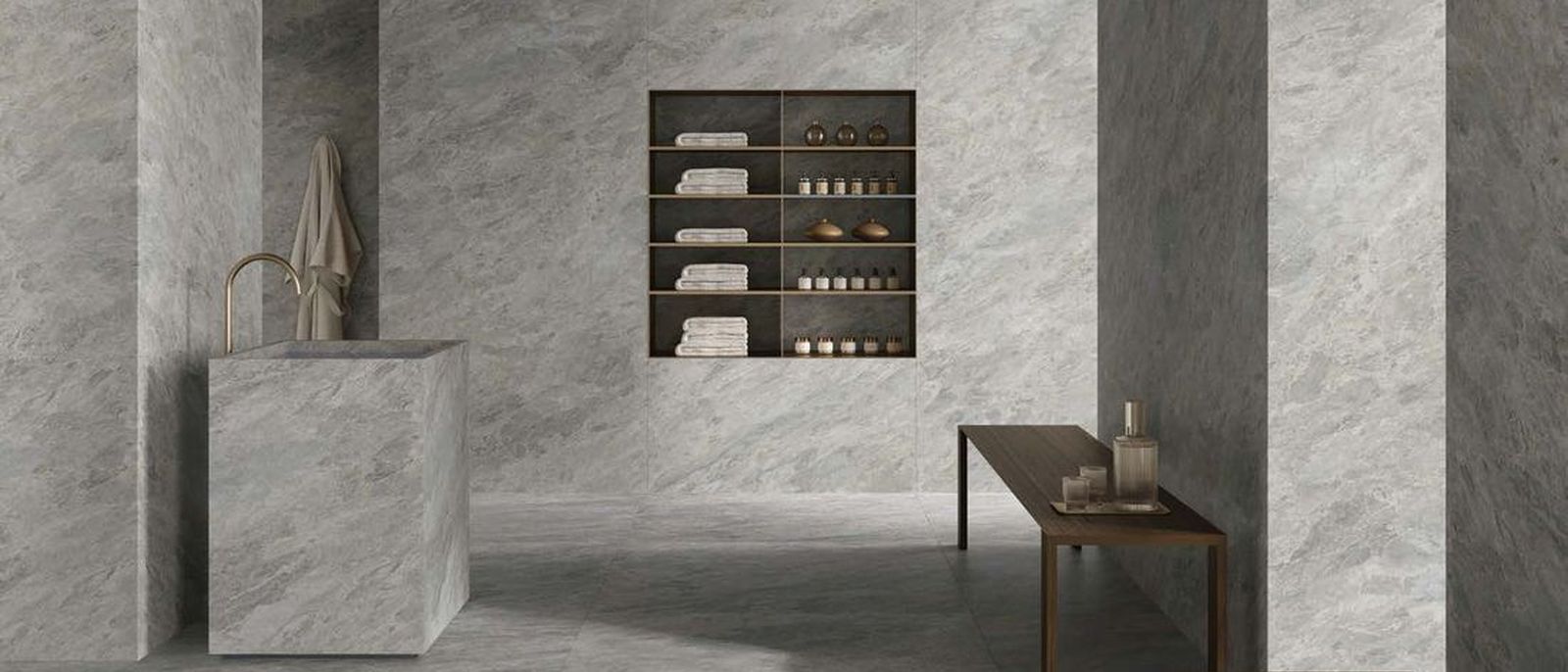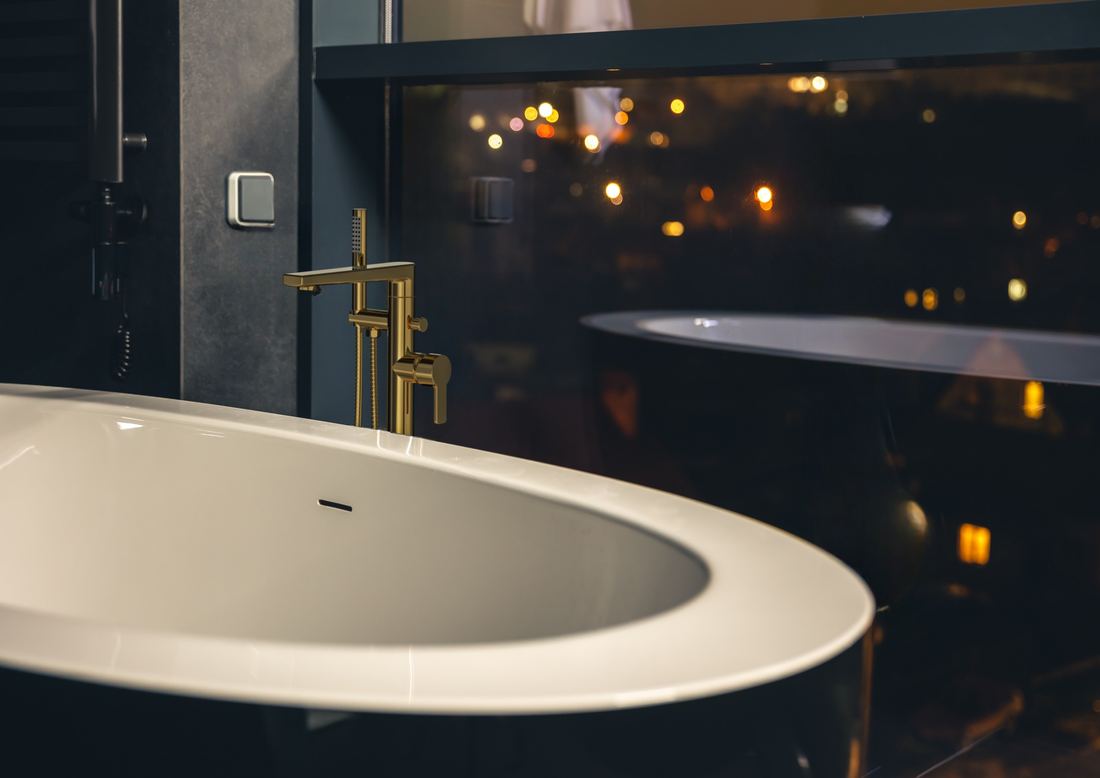
CoalBrook sits in our bath fittings collection as the design-led, architectural option: considered proportion, restrained detailing, and finish ranges that suit contemporary and transitional interiors without shouting. It is most often specified for Velora Elite and Velora Forte bathrooms where the fitting is meant to complete a composition rather than lead it — and it is particularly effective alongside large-format slab walls, where a busy fitting would fight the material.
A vocabulary rather than a range
The useful way to think about CoalBrook is as a consistent design language applied across a bathroom, rather than as a catalogue of individual products. Proportion is the through-line: spout lengths, handle diameters and wall-plate sizes are drawn to relate to one another, so a basin mixer, a shower set and a bath filler from the same family read as a set rather than as three purchases.
That consistency is worth more than it sounds. The most common way a well-designed bathroom goes wrong is a mixed set — a bold basin mixer beside a plain shower valve and an unrelated towel rail. Specifying one vocabulary across the room removes the problem before it starts.
Where restraint is the right answer
A fitting has to be chosen against what surrounds it. In a bathroom with a book-matched slab wall, a strongly veined vanity top or dramatic joinery, the material is already doing the work — a sculptural, high-contrast fitting competes with it, and the room ends up feeling busy rather than considered.
This is the situation CoalBrook is built for: quiet detailing that lets the surface lead, in a finish chosen to sit with the stone rather than against it. In the opposite situation — a deliberately plain bathroom where the fitting is meant to be the single point of interest — a more expressive house may serve the room better, and we will say so.
Finish, and living with it
Finish is the decision clients most often revisit, because it is the part they touch daily. Two practical points hold across any bath-fittings house. First, decide whether every metal element in the room will match — mixer, shower, waste, trap, towel rail, robe hook, mirror frame, shower channel — because a single unmatched chrome waste under a brushed brass basin is what the eye finds first.
Second, understand how the specific finish behaves in use. Polished finishes show water spotting most in hard-water areas and want a wipe after use; brushed and matt finishes hide marks better and are more forgiving in a family bathroom. Deeper coloured finishes are generally produced by PVD, a hard vacuum-deposited coating that resists wear far better than plated colour — the distinction is worth confirming for any non-chrome finish, and our Fima guide covers the mechanics of PVD and cartridges in more detail.
Concealed work belongs to the drawing stage
Anything concealed — a built-in shower valve, a wall-mounted basin mixer, a wall-mounted bath filler — has to be decided before the plumbing is closed. The rough-in body sets the wall depth, the tile thickness affects how the trim sits, and the outlet centres are fixed in masonry long before the visible parts arrive.
Changing a concealed decision after tiling means opening a finished wall. This is why we push bath-fittings selection much earlier in a project than clients expect — our bathroom planning guide sets out the full sequence and what has to be locked at each stage.
Seeing it before deciding
Weight, handle action and the exact tone of a finish do not photograph. A brushed finish in a catalogue image can be warmer or greyer than it appears, and two brands' 'matt black' rarely match. Our Sector 82 studio displays fittings as working pieces so you can operate the lever, feel the balance and hold two finishes against your actual tile or slab sample in daylight. See the wider collection on our bath fittings page, or the houses we curate from on the brands page.