Clients usually arrive with a design shortlist. We usually respond with a size conversation, because the same design behaves completely differently at 600x600 than it does across a 1200x1800 floor — and because the move towards larger formats is the single biggest shift in Indian flooring today. This guide covers the sizes in the market right now, in the language the market actually uses — 2x4, 32x64, 6x4 — where each shines, and the planning that lets a larger format deliver everything it promises.
The sizes you will actually encounter
600x600 mm (2x2 ft) remains the most handlable tile made — economical to lay, forgiving of minor substrate imperfection, easy to replace, and available in the widest range of designs. For compact rooms, utility spaces and builder-floor programmes it still serves beautifully.
600x1200 mm (2x4 ft) is the other ever-dependable format — along with 2x2, the size every installer in the region knows intimately, which is exactly what makes it so reliable. It gives a calm floor with manageable joints and suits bedrooms and mid-sized rooms very well. For the main living floors of a well-appointed home, though, it has become the starting point of the conversation rather than the finish of it.
800x1600 mm (32x64 inch) is where living-room flooring in good homes now begins. Fewer joints, a genuinely continuous surface, and a scale that flatters open living-dining layouts — this is the size clients increasingly walk in asking for, and it rewards them for it. It asks for a flat substrate and a skilled installer, both of which are entirely achievable with planning.
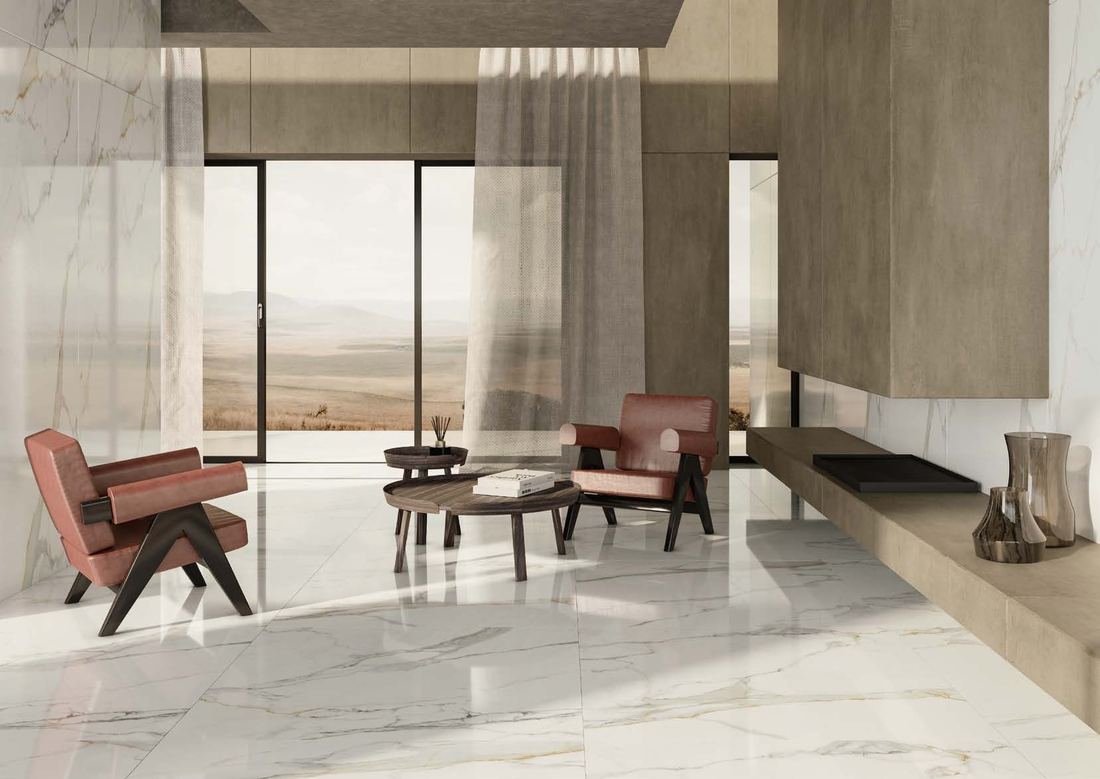
1200x1800 mm (6x4 ft) is the size of the moment — the format now overtaking 32x64 for premium flooring. A 6x4 floor reads almost monolithic: a large living room resolves into a handful of pieces, and the material — a marble, a travertine, a stone — finally gets the uninterrupted canvas it deserves. We are specifying it more every month, and it is on our floor at the studio precisely so clients can stand on it at full scale.
1200x2400 mm and beyond — large-format slabs extend the same idea to walls, counters and full-height cladding: one piece covering an entire shower wall or kitchen dado without a joint. Handling, adhesives and edge-finishing become a specialist's discipline at this scale, which is why we treat slabs as their own category on our surface solutions page.
Getting the best from larger formats
Going larger is the right instinct — a bigger tile means fewer joints, easier cleaning, and a floor that feels custom rather than assembled. What separates a spectacular large-format floor from an ordinary one is simply preparation, and all of it is straightforward: a levelled, flat substrate; an installer who works with these sizes regularly; and a layout drawn before ordering so full pieces sit where the eye lands and cuts tuck away at the edges. Give a 32x64 or 6x4 floor that preparation and it will outperform anything smaller, in looks and in daily living.
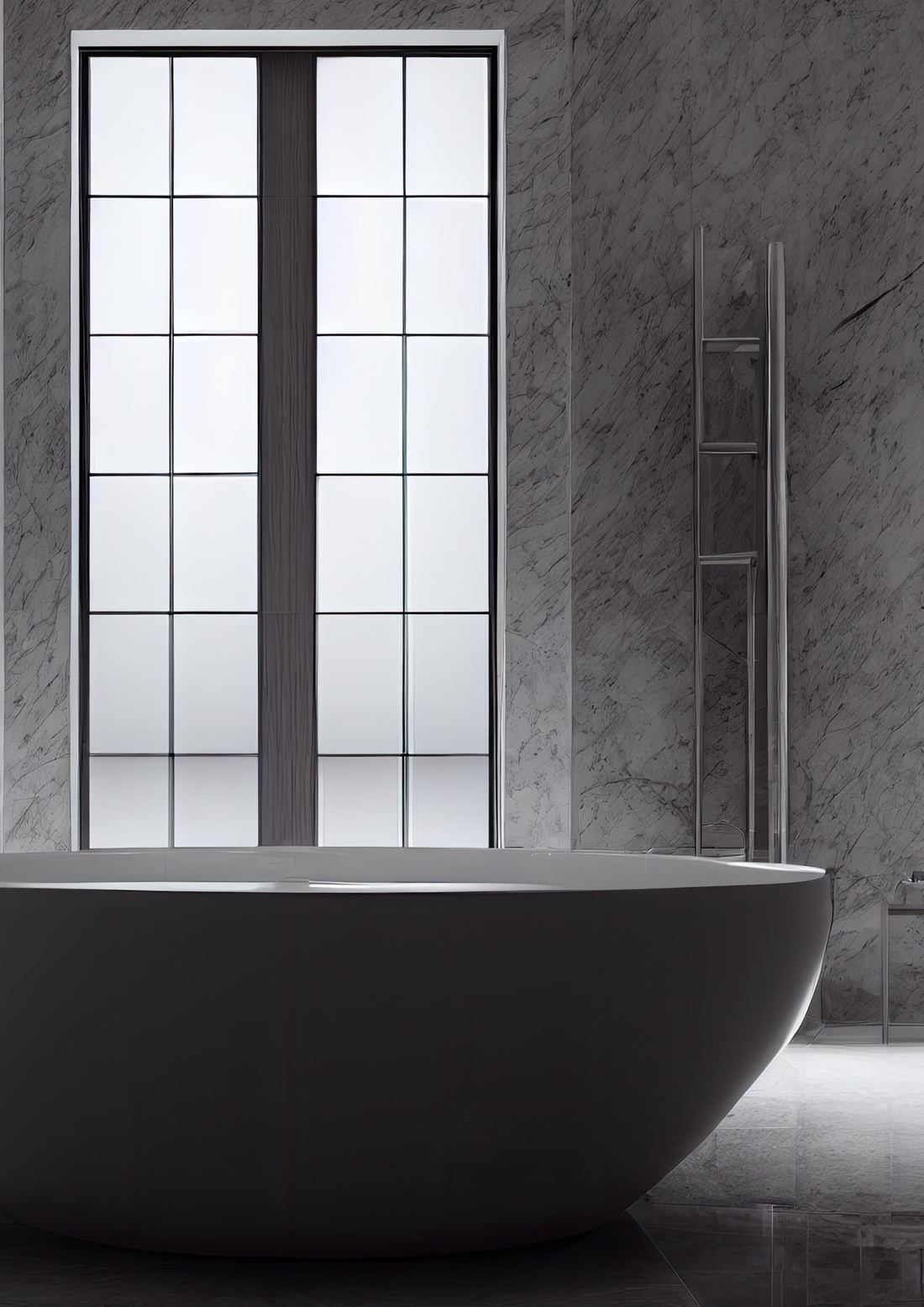
Bathrooms deserve one thoughtful pairing: large formats look superb on bathroom walls — a 6x4 or slab wall with minimal joints is one of the best upgrades a bathroom can get — while the floor wants either a structured anti-slip surface or slightly smaller pieces so falls run cleanly to the drain. Our tiles page covers slip ratings and wet-area choices in more detail.
Joints, wastage and the questions to ask before ordering
Rectified tiles allow joints of 2–3 mm, which is what gives large formats their near-seamless look — ask for rectified when the goal is a continuous floor. A fine joint is a feature, not a compromise: it absorbs structural movement and keeps the floor sound for decades. Insist the layout be drawn before ordering: a drawn layout is what converts area into an honest order quantity and decides where every cut falls.
On quantities, plan 7–10% over the measured area for straight layouts, a little more where a room has many cuts — and keep a few pieces from the same batch after handover, since shade varies between production batches and an exact match later is rarely possible. We work these numbers against your actual area statement at the studio before anything is ordered.
Stand on the size before you decide
Photographs flatten scale — a 2x4 and a 6x4 look identical on a phone screen. At our studio in Sector 82, Mohali, the full range is displayed as laid floors and clad walls — 2x2 and 2x4 through 32x64, 6x4 and full slabs — so you can stand on the size, walk it, and see the joints in real light. Browse the current display on our products page, then come and experience it at full scale.